
Dropship Kitchenware: How to Source & Sell in 2026
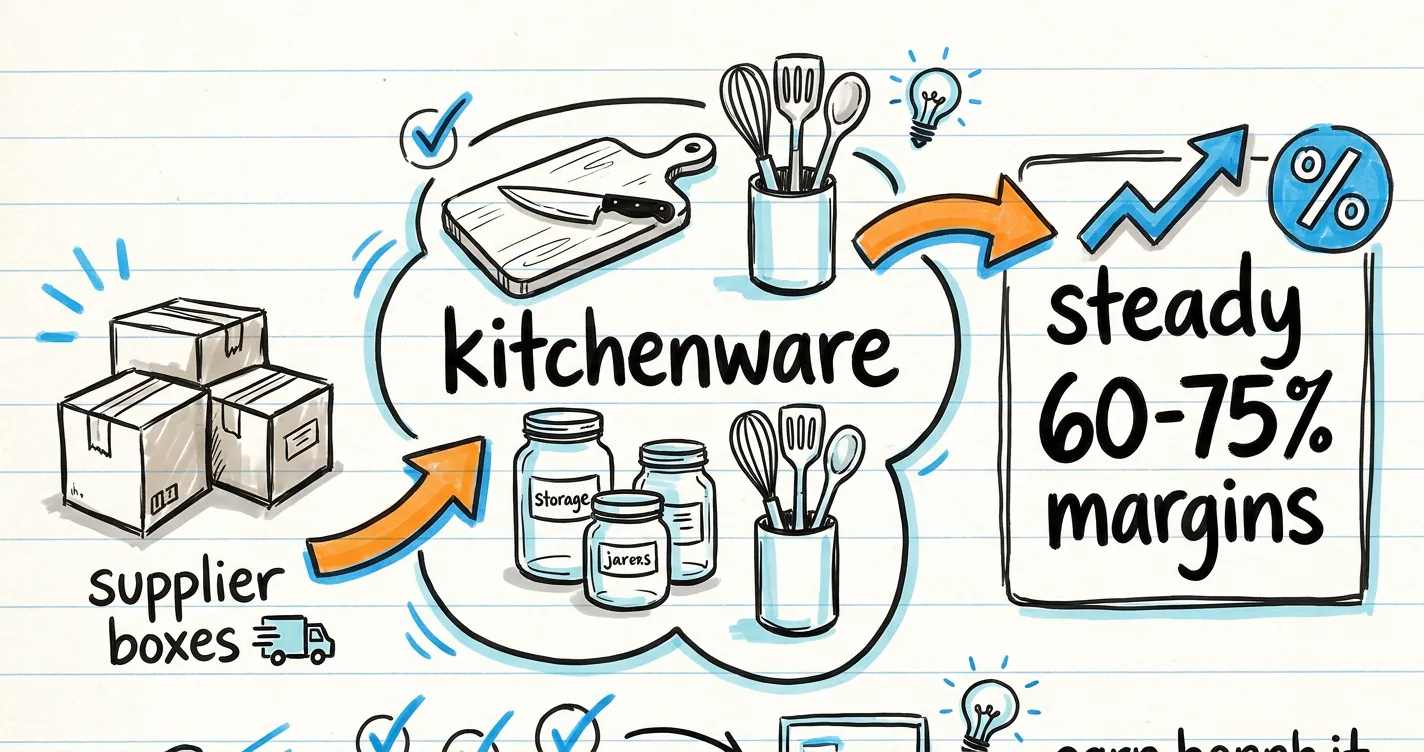
Dropship kitchenware means selling the functional side of the kitchen — utensils, cutting boards, storage containers, and cookware — instead of chasing viral gadgets. It is less sexy and more reliable: demand is steady year-round, video demos are optional, and the products rarely break in shipping. This guide explains what to sell, where to source it, and how to run the margin math for the US market.
Kitchenware vs. Kitchen Gadgets: Pick Your Lane
| Kitchenware | Kitchen Gadgets | |
|---|---|---|
| Examples | Cutting boards, storage, utensils, cookware | Choppers, blenders, peelers |
| Demand | Steady, evergreen | Spiky, trend-driven |
| Ad competition | Moderate | High |
| Margin | 60–75% | 65–80% (but riskier) |
| Best for | Stable stores, repeat buyers | Breakout products, video ads |
Most profitable stores run both: kitchenware as the reliable baseline and gadgets as the growth bet.
The Best-Selling Kitchenware to Dropship
These categories move consistently for US sellers:
- Bamboo and acacia cutting boards — source $6–$11, retail $24.99–$39.99 (~65% margin); premium aesthetic sells well.
- Silicone utensil sets — source $5–$9, retail $19.99–$29.99 (~70% margin); BPA-free angle is a winner.
- Glass food storage containers (set of 6+) — source $12–$18, retail $39.99–$59.99 (~62% margin); heavier, so watch shipping.
- Spice jars and organizers — source $6–$10, retail $21.99–$32.99 (~68% margin); great for bundles.
- Waffle-weave kitchen towel sets — source $3–$5, retail $13.99–$18.99 (~72% margin); consumable repeat sale.
- Oil dispensers and cruets — source $4–$7, retail $17.99–$24.99 (~70% margin).
Why Kitchenware Returns Are Lower
Faulty motors and fragile parts drive most dropshipping returns. Cutting boards, utensils, and jars have no motor and few breakage risks, so return rates stay in the 2–5% range — well under the 6% threshold that starts hurting margin math.
Where to Source Kitchenware for US Delivery
- US-based suppliers via Spocket — faster delivery and premium kitchenware quality; margins are lower but so are claim risks.
- CJdropshipping — large kitchenware catalog, US warehouses, custom branding available.
- Zendrop — easy product import to your store with US shipping options.
- AliExpress via DSers — cheapest costs for testing; expect longer delivery times for US customers.
The Kitchenware Sourcing Checklist
Follow this before you commit inventory or ad budget:
- Confirm the weight per unit — glass and heavy cookware often cost more to ship than to source.
- Check the supplier’s US templates — does the listing auto-fill accurate shipping zones?
- Verify packaging — glass jars need inserts/corrugated layers or the refunds eat your margin.
- Sample the top 3 items — order them to your own US address and assess quality and unboxing.
- Check current ad counts — steady categories still get crowded; know how many sellers are already running ads.
Using PYRATREND, you can check any kitchenware product’s advertiser count, Shopify competitor count, and Google Trends direction in one screen. That single view tells you whether a “safe” product is actually at entry-saturation now versus six months ago.
Kitchenware Mistakes That Cost Real Money
- Treating glass as lightweight — one returned set of jars can eat an entire day’s profit.
- No bundling — kitchenware buyers shop in sets; selling single items wastes AOV.
- Overpricing premium wood — bamboo boards above $40 hit buyer resistance fast.
- Ignoring the shelf-life of trends — “spice trend” fades as fast as it spikes; stick to the classics.
Bottom Line
Dropship kitchenware gives you a steady, lower-risk baseline for a US store with 60–75% gross margins and return rates below 5%. Combine reliable items (cutting boards, storage, utensils) with a couple of viral gadgets, validate every pick with real ad and search data, and scale the winners. Start from our dropshipping kitchen overview and the 17 best kitchen products to dropship to build your first shortlist.
Frequently Asked Questions
What is the difference between kitchenware and kitchen gadgets in dropshipping?
Kitchenware is the functional back catalog — utensils, cutting boards, storage containers, and cookware — while gadgets are the viral, gadget-y impulse buys. Kitchenware has steadier demand and fewer trends; gadgets have higher spikes.
Can you make money dropshipping kitchenware?
Yes. Non-fragile kitchenware like bamboo cutting boards, silicone utensils, glass food containers, and spice jars clears 60–75% gross margins, with lower ad costs because demand is steady rather than seasonal.
Chat with Agent PYRA
Tell Agent PYRA your niche and it finds winning products with real-time data: saturation scores, Google Trends, competitor ad performance, and AliExpress sourcing links. Stop scrolling spreadsheets and let AI do the research.
- Real-time saturation & trend analysis
- Cross-referenced Shopify, Amazon & Facebook Ads
- AliExpress & supplier source links
- Competitor ad creative & performance data
Start Finding Winning Products Today
Join thousands of dropshippers who use Pyratrend to spot trending products before they saturate the US market. Get 30 free credits when you sign up — no credit card required.
- Daily updated US-market product data
- Facebook Ad Library integration
- Shopify competitor store tracking
- Custom watchlists & alerts
Explore more niches guides in the Pyratrend Insights hub, or check out today's trending products on our dashboard.