B2C Ecommerce: What It Is, Examples & How to Start
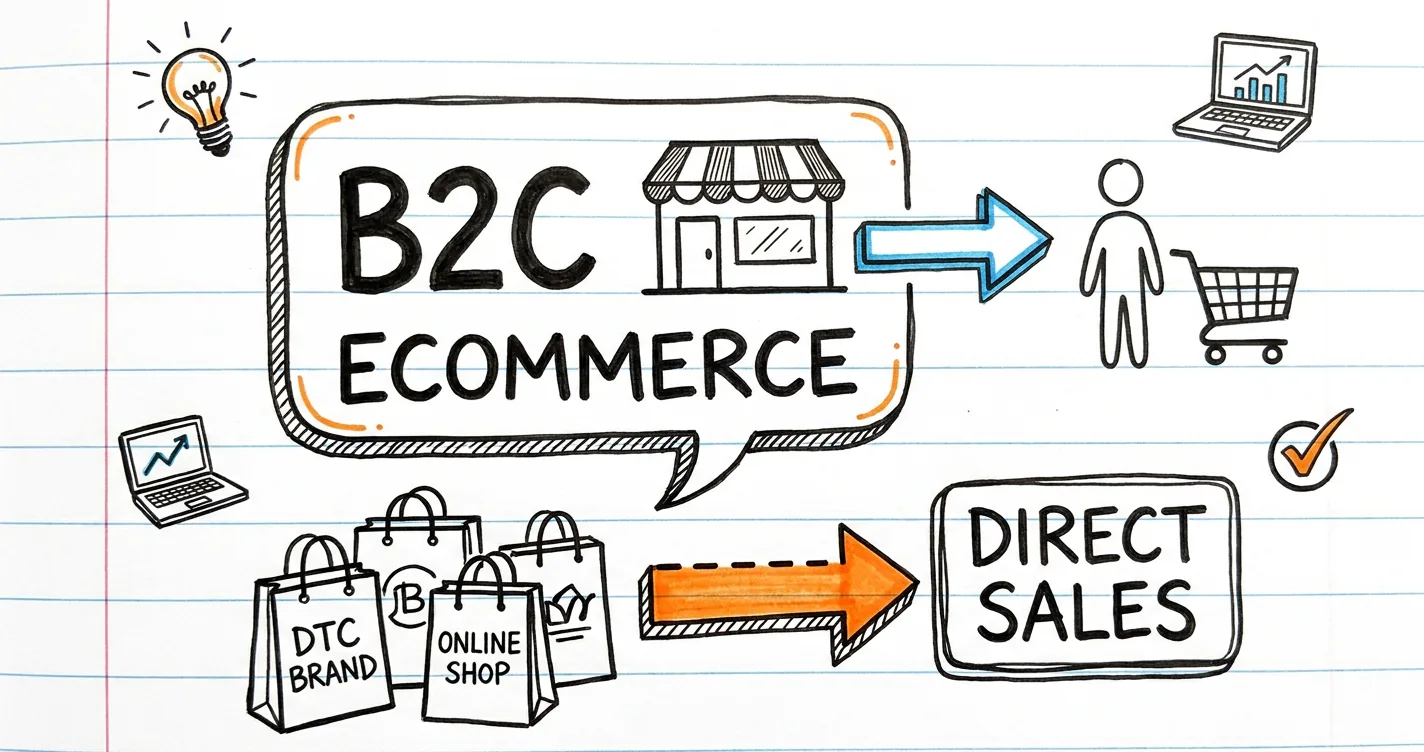
B2C ecommerce (business-to-consumer) is the model where a business sells products or services directly to individual shoppers online — the storefront-to-doorstep relationship that powers Amazon, Nike.com, and thousands of direct-to-consumer brands. In 2025, US B2C ecommerce pulled in an estimated $1.19–$1.43 trillion, about 16.4% of total US retail sales. This guide explains how B2C ecommerce works, the models that win, and how to start one.
What Does B2C Ecommerce Mean?
B2C ecommerce is any online transaction between a business and a consumer. The buyer is one person shopping for themselves, the experience is optimized for impulse and ease, and the payment is usually a credit card or digital wallet.
The key traits that separate B2C from other models:
- One buyer, one decision — the shopper decides; there is no procurement team.
- Consumer-grade UX — big images, simple checkout, mobile-first.
- Marketing-led demand — social ads, email, and reviews drive most traffic.
B2C Ecommerce Business Models
Direct-to-Consumer (DTC) Brands
DTC brands skip retail middlemen and sell from their own store. Best-known examples:
- Warby Parker (eyewear), Allbirds (footwear), Glossier (beauty), Away (luggage), Gymshark (apparel).
Subscription / Replenishment
Recurring revenue built on routine purchases:
- Dollar Shave Club (grooming), BarkBox (pet care).
Marketplace Sellers
Selling through marketplaces such as Amazon, Walmart, and eBay — the largest B2C channel, with Amazon alone at roughly $447–$492 billion in 2025 US online sales.
Manufacturer Direct
Brands selling straight from their own website:
- Nike.com, Apple Online Store.
B2C Ecommerce Stats That Matter
- US B2C ecommerce: ~$1.19–$1.43 trillion in 2025.
- Share of US retail: ~16.4% official, ~23% of addressable online-eligible retail.
- Global retail ecommerce: ~$5.6–$6.9 trillion in 2025.
- Marketplace gravity: Amazon holds a ~38–40% share of US ecommerce, Walmart ~6–7%.
How to Start a B2C Ecommerce Business
- Pick a proven product category — start where US buyers already spend.
- Choose a platform — Shopify, BigCommerce, Wix, WooCommerce, or a marketplace first.
- Source or manufacture — dropshipping, wholesale, or POD for low-risk starts.
- Launch with 5–20 SKUs — a tight catalog converts better than a thin mega-store.
- Drive traffic with short-form video — TikTok and Reels now power most organic B2C discovery.
- Optimize the checkout — recovery emails and fast payment methods lift revenue 10–20%.
Common B2C Mistakes
- Copying the marketplace — a DTC site must look like a brand, not a classified ad.
- No social proof — US shoppers read reviews before buying; add them early.
- Slow shipping surprises — state delivery windows on the product page.
- Treating B2C like B2B — consumer buyers are impulse-driven; keep the funnel short.
B2C vs B2B at a Glance
| B2C | B2B | |
|---|---|---|
| Buyer | Individual | Business |
| Decision speed | Fast / impulse | Slow / procurement |
| Pricing | Fixed | Negotiated / tiered |
| Checkout | Simple | Quotes, PO, net terms |
| Tools | Review apps, DTC analytics | ERP, CRM, account portals |
Bottom Line
B2C ecommerce is selling directly to consumers, and with US sales past $1.19 trillion in 2025 it is the most accessible ecommerce model for a new seller. Start lean, build a real brand presence, and optimize the checkout as you grow. Contrast it with the enterprise world in our b2b ecommerce solution guide, and see how the fundamentals tie together in our ecom websites pillar.
Frequently Asked Questions
What does B2C ecommerce mean?
B2C ecommerce (business-to-consumer) is when a business sells products or services directly to individual shoppers online. Examples include Amazon, Nike.com, and direct-to-consumer brands like Warby Parker and Glossier.
How big is B2C ecommerce in 2026?
US retail (B2C) ecommerce reached roughly $1.19–$1.43 trillion in 2025, about 16.4% of total US retail sales. Globally, retail ecommerce totaled in the $5.6–$6.9 trillion range.
What is the difference between B2B and B2C ecommerce?
B2C sells to individuals with simple checkouts and consumer UX. B2B sells to businesses with bulk pricing, quotes, net terms, and ERP/CRM integration. They need different platforms and strategies.
Chat with Agent PYRA
Tell Agent PYRA your niche and it finds winning products with real-time data: saturation scores, Google Trends, competitor ad performance, and AliExpress sourcing links. Stop scrolling spreadsheets and let AI do the research.
- Real-time saturation & trend analysis
- Cross-referenced Shopify, Amazon & Facebook Ads
- AliExpress & supplier source links
- Competitor ad creative & performance data
Start Finding Winning Products Today
Join thousands of dropshippers who use Pyratrend to spot trending products before they saturate the US market. Get 30 free credits when you sign up — no credit card required.
- Daily updated US-market product data
- Facebook Ad Library integration
- Shopify competitor store tracking
- Custom watchlists & alerts
Explore more ecommerce guides in the Pyratrend Insights hub, or check out today's trending products on our dashboard.