

Best SEO Ecommerce Platform: The 2026 Comparison
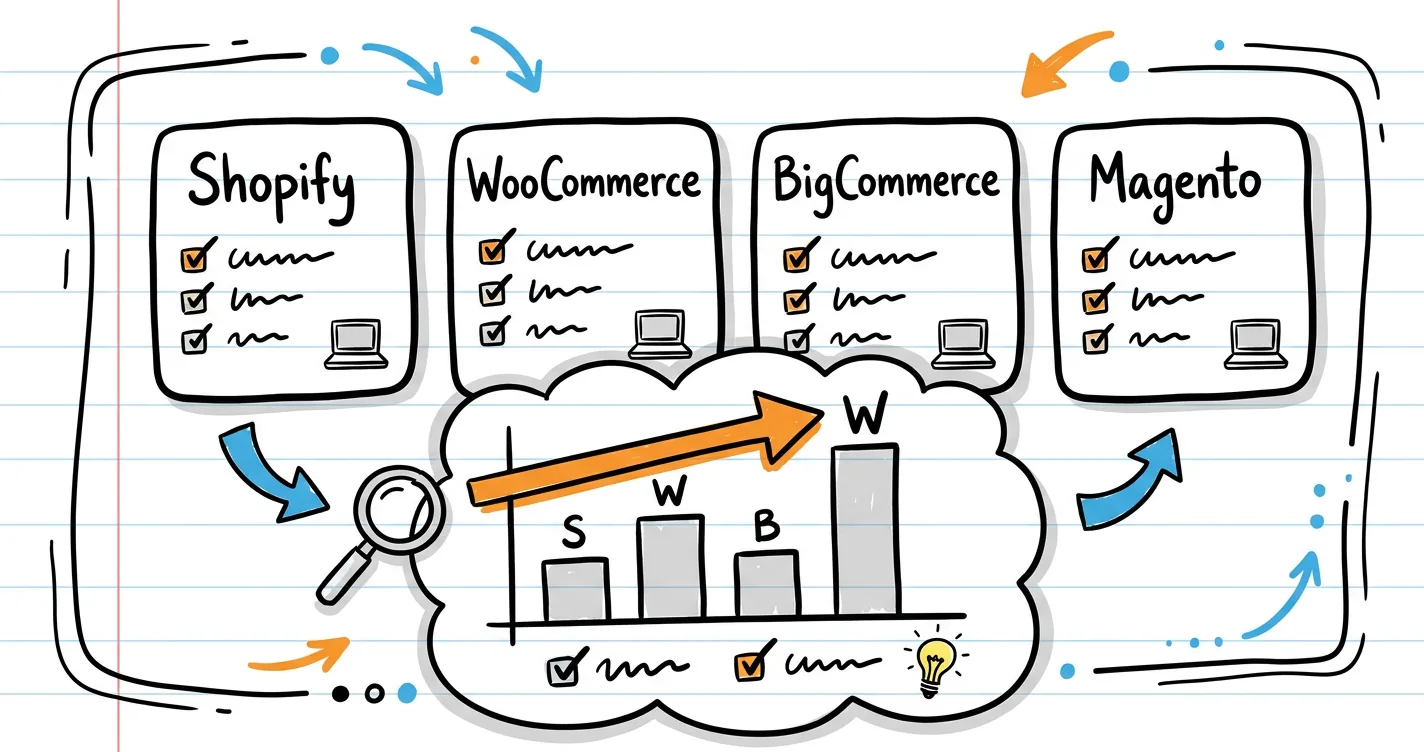
Best SEO ecommerce platform — the platform that ranks your store best in Google — matters because organic search drives roughly 53% of web traffic and 31–40% of ecommerce revenue. In this guide, we compare Shopify, WooCommerce, BigCommerce, Wix, and Magento on SEO power, cost, and fit for your US store in 2026.
What Makes an Ecommerce Platform “Best for SEO”
A search-engine-friendly platform gives you:
- Clean, customizable URLs — readable paths, not parameter strings.
- Metadata control — titles and descriptions you can edit per page.
- Structured data — Product, Offer, Review, and Breadcrumb schema.
- Page speed — fast Core Web Vitals (LCP ≤ 2.5s, INP ≤ 200ms, CLS ≤ 0.1).
- Crawl control — robots.txt, canonical tags, and faceted-navigation management.
The Best SEO Ecommerce Platforms Compared
| Platform | SEO Strength | Cost | Best For |
|---|---|---|---|
| WooCommerce | Maximum control | Hosting + dev | Custom, content-rich stores |
| BigCommerce | Best built-in SaaS SEO | $29–$299/mo | Scaling catalogs |
| Shopify | Speed + ease | $39–$399/mo | Most stores |
| Wix | Simple SEO setup | $29–$159/mo | Small catalogs |
| Magento/Adobe Commerce | Enterprise power | $500+/mo hosting | Large enterprises |
The Best Ecommerce SEO Platform by Use Case
WooCommerce — The SEO Control Winner
Full source-code access means complete control over URLs, robots.txt, and schema via plugins like Yoast or Rank Math. The best choice when technical SEO control is non-negotiable.
BigCommerce — The Best Built-In SEO
Customizable URL structures (unlike Shopify), automatic 301 redirects, integrated microdata, and faceted-navigation handling — the strongest out-of-the-box SEO among hosted platforms.
Shopify — The Best All-Rounder
Solid built-in SEO with automatic canonical tags and sitemaps, but a rigid /products/ URL structure. The easiest platform to maintain and scale with good SEO performance.
Wix & Squarespace — Small-Store Simplicity
Good for catalogs under ~100 products, but they lack the deep technical controls bigger stores need.
Magento / Adobe Commerce — Enterprise SEO
Unlimited customization, hreflang for international, and complete server control — for enterprises with dedicated engineering teams.
The 2026 SEO Reality Check
- Organic search drives ~53% of web traffic and 31–40% of ecommerce revenue.
- 60–68% of US Google searches end without a click — AI Overviews are capturing demand, so platforms with structured-data support matter more.
- Core Web Vitals are now INP-based (≤ 200ms), so the platform’s JavaScript footprint affects rankings.
What This Means for Your Choice
Pick a platform that lets you control metadata, schema, URLs, and speed. That’s WooCommerce or BigCommerce for control, Shopify for ease, and Magento for enterprise scale.
How to Choose Your SEO Platform
- Budget — Shopify starts at $39/mo; Magento enterprise can cost $22k–$40k+/yr.
- Team skills — WooCommerce needs a developer; Shopify works for non-technical teams.
- Catalog size — big catalogs need faceted-navigation control (BigCommerce wins).
- International plans — hreflang support (Magento, WooCommerce).
Bottom Line
The best SEO ecommerce platform depends on your team and scale. WooCommerce gives maximum SEO control, BigCommerce has the best built-in SEO, Shopify is the easiest all-rounder, and Magento powers enterprise stores. Whichever you pick, optimize for Core Web Vitals and structured data — organic search is 31–40% of ecommerce revenue. See our best ecommerce for seo roundup, ecommerce seo tips, and how to build a search engine friendly ecommerce site.
Frequently Asked Questions
What is the best ecommerce platform for SEO?
WooCommerce offers the most SEO control, BigCommerce has the best built-in SEO among hosted platforms, and Shopify is the best all-rounder for speed and ease. Magento/Adobe Commerce is best for enterprise SEO.
Is Shopify good for SEO in 2026?
Yes — Shopify has strong built-in SEO (metadata, canonical tags, auto sitemaps) but uses a rigid URL structure. It ranks well for most stores if you work within its architecture.
What makes an ecommerce platform search-engine friendly?
Clean URLs, editable metadata, structured data, fast page speed, faceted-navigation control, and XML sitemaps. Organic search drives about 53% of web traffic and 31–40% of ecommerce revenue.
Chat with Agent PYRA
Tell Agent PYRA your niche and it finds winning products with real-time data: saturation scores, Google Trends, competitor ad performance, and AliExpress sourcing links. Stop scrolling spreadsheets and let AI do the research.
- Real-time saturation & trend analysis
- Cross-referenced Shopify, Amazon & Facebook Ads
- AliExpress & supplier source links
- Competitor ad creative & performance data
Start Finding Winning Products Today
Join thousands of dropshippers who use Pyratrend to spot trending products before they saturate the US market. Get 30 free credits when you sign up — no credit card required.
- Daily updated US-market product data
- Facebook Ad Library integration
- Shopify competitor store tracking
- Custom watchlists & alerts
Explore more ecommerce guides in the Pyratrend Insights hub, or check out today's trending products on our dashboard.