

Ecommerce Design: The 2026 Conversion-Focused Guide
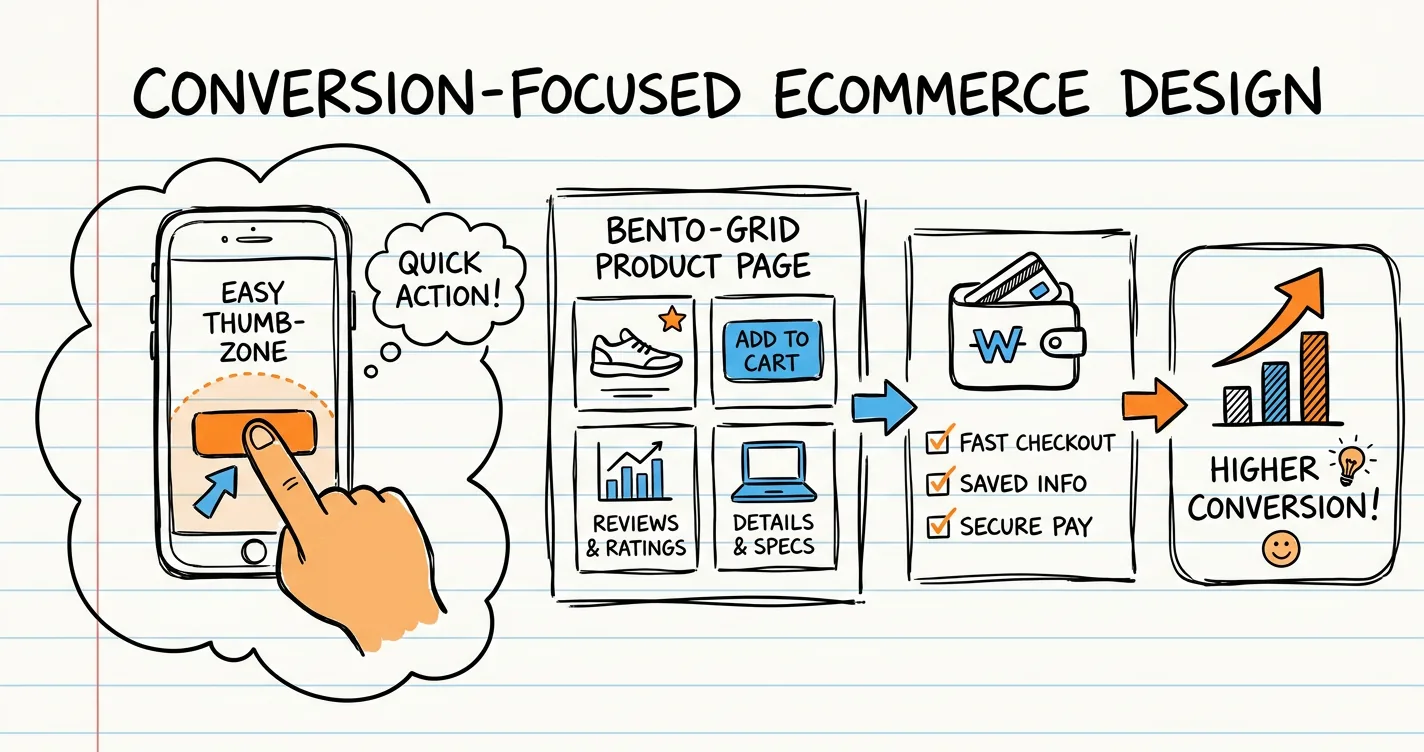
Ecommerce design is the art and science of designing an online store that converts — the layout, product pages, navigation, and checkout that turn visitors into buyers. In this guide, we cover the design principles and trends that actually move conversion in 2026, with a US-market lens.
Why Ecommerce Design Determines Sales
Design isn’t decoration — it’s the difference between a sale and a bounce. The numbers are blunt:
- ~26% of cart abandonments come from forced account creation.
- ~48% of cart abandonment happens when unexpected fees appear at checkout.
- ~68–72% of traffic and ~59% of global ecommerce sales are now mobile.
That’s why conversion-focused design starts with removing friction, not adding visual flair.
The Core Principles of High-Converting Ecommerce Design
Mobile-First “Thumb-Zone” Layouts
Design for single-thumb navigation first:
- Sticky Add to Cart bars that follow the scroll.
- Bottom-sheet filters and checkout buttons in the thumb zone.
- Large tap targets and clean spacing — no desktop-first thinking.
Frictionless & Accelerated Checkout
The checkout is where stores win or lose:
- One-tap wallets — Apple Pay, Google Pay, Shop Pay, and PayPal Fastlane.
- Guest checkout always available — never force registration.
- Transparent costs upfront — show shipping and tax before the last step.
Bento Grid Product Pages
Replace the old image-plus-bullets product page with modular, story-driven bento grids that blend lifestyle video, reviews, FAQs, and comparison tables in one scannable layout.
AI-Powered Personalization
Conversational search and product quizzes convert at much higher rates than standard browsing — some implementations see ~12% conversion vs. ~3% for browsing. Dynamic heroes and intent-based recommendations keep shoppers engaged.
2026 Ecommerce Design Trends to Watch
| Trend | What It Means | Why It Matters |
|---|---|---|
| Micro-interactions | Subtle animations on cart, filters | Feels alive, guides attention |
| Real-time feedback | Progress bars to free shipping | Reduces abandonment |
| Video-first PDPs | Lifestyle video in the hero | Boosts purchase confidence |
| Conversational search | Chat-style product discovery | AI-ready, higher conversion |
| Bento grids | Modular, story-driven layouts | Replaces static PDPs |
Common Ecommerce Design Mistakes
- Hiding shipping costs — the #1 abandonment trigger.
- Forcing signup — kills impulse purchases.
- Desktop-first design — ignores where most traffic actually is.
- Cluttered product pages — too much text, no hierarchy, no video.
- Ignoring mobile load speed — slow pages tank both conversion and SEO.
How to Get Ecommerce Design Right
Start with a strong template or hire a specialist. For a fully bespoke, conversion-optimized storefront, an ecommerce web design agency handles the strategy, UX, and build together — see our custom ecommerce development and e-commerce development guides for the full picture. And if design trends feel overwhelming, focus on the fundamentals: mobile, fast, frictionless.
Bottom Line
Ecommerce design that converts is mobile-first, frictionless, and honest about costs. In 2026 the winners lean on thumb-zone layouts, accelerated checkout, and AI-powered personalization. Match your design to proven demand and your margins will follow — PYRATREND’s trending products feed shows you what shoppers actually want before you spend on a new design. Explore the full range of approaches in ecommerce development solutions.
Frequently Asked Questions
What is ecommerce design?
Ecommerce design is the visual and UX design of an online store — layout, product pages, navigation, and checkout — optimized to move visitors from browsing to buying.
What are the top ecommerce design trends in 2026?
The biggest 2026 trends are mobile-first thumb-zone layouts, one-tap digital wallets, guest checkout, bento-grid product pages, AI-powered personalization, and conversational search.
How does design affect ecommerce conversion rates?
Design directly drives conversion. Forced registration accounts for about 26% of cart drop-offs and unexpected fees cause about 48% of cart abandonment, so frictionless design is a major revenue lever.
Chat with Agent PYRA
Tell Agent PYRA your niche and it finds winning products with real-time data: saturation scores, Google Trends, competitor ad performance, and AliExpress sourcing links. Stop scrolling spreadsheets and let AI do the research.
- Real-time saturation & trend analysis
- Cross-referenced Shopify, Amazon & Facebook Ads
- AliExpress & supplier source links
- Competitor ad creative & performance data
Start Finding Winning Products Today
Join thousands of dropshippers who use Pyratrend to spot trending products before they saturate the US market. Get 30 free credits when you sign up — no credit card required.
- Daily updated US-market product data
- Facebook Ad Library integration
- Shopify competitor store tracking
- Custom watchlists & alerts
Explore more ecommerce guides in the Pyratrend Insights hub, or check out today's trending products on our dashboard.