Ecommerce Web Design Agency: What They Do & What It Costs
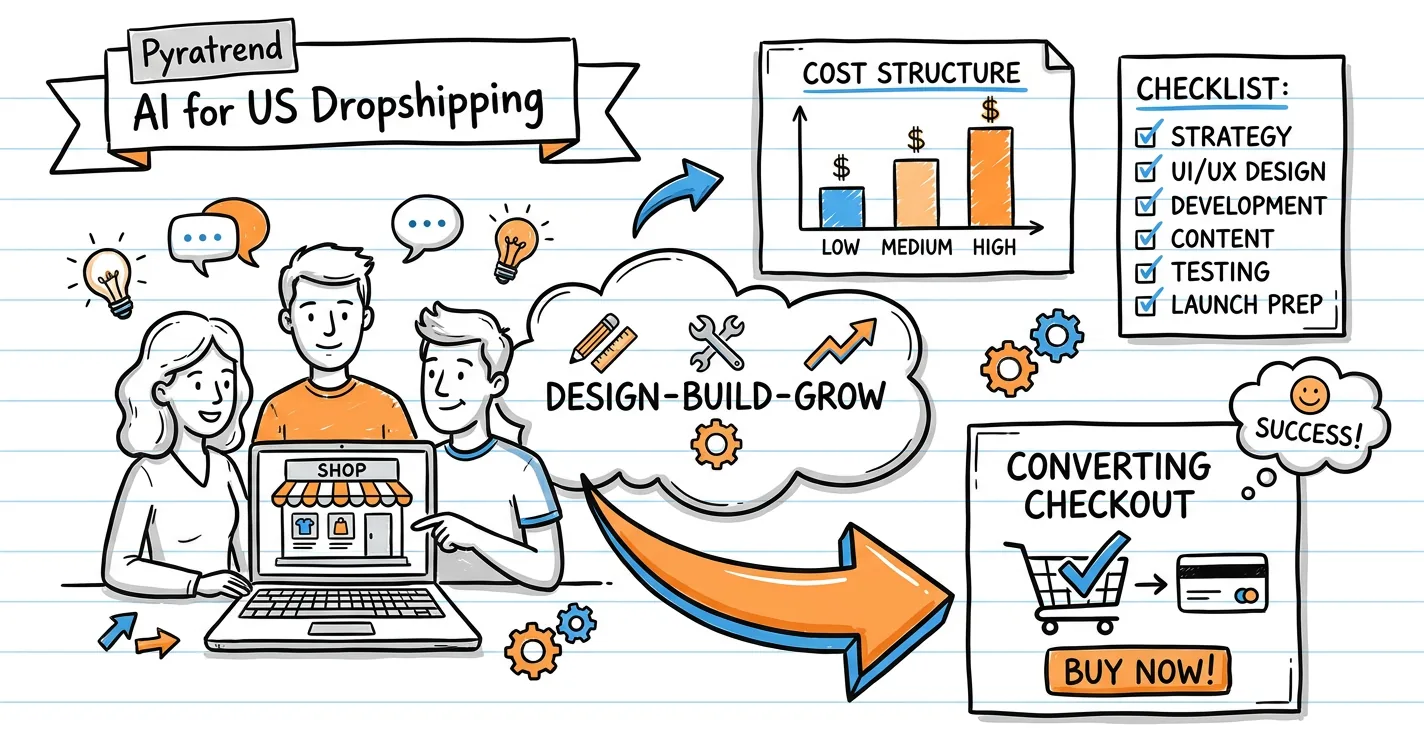
Ecommerce web design agency is a team that designs, builds, and grows online stores — handling everything from UX strategy and custom development to technical SEO and conversion optimization. In this guide, we break down what an agency actually does, what it costs in 2026, and how to choose the right one for your US store.
What an Ecommerce Web Design Agency Does
Agencies cover the full lifecycle of an online store, not just the visual design. The core services break into four buckets:
- Strategy & UX — customer journey mapping, wireframes, and conversion-focused page layouts before a single line of code is written.
- Design — bespoke UI/UX, product page templates, and branded checkout flows that turn browsers into buyers.
- Development — custom theme work, headless builds, and integrations with ERP, CRM, payment, and shipping systems.
- Growth — conversion rate optimization (CRO), A/B testing, and technical SEO that keeps the store ranking and selling after launch.
What an Ecommerce Web Design Agency Costs in 2026
Pricing varies widely by scope. The grounded 2026 figures for US agencies:
| Engagement | Typical Cost |
|---|---|
| Simple store setup | $2,000–$8,000 |
| Customized SMB build | $8,000–$25,000 |
| Mid-market custom build | $25,000–$60,000 |
| Enterprise / B2B build | $60,000–$150,000 |
| Monthly support retainer | $2,500–$5,000+ |
| Full-service retainer | $15,000–$50,000+/mo |
US agencies typically bill $150–$300/hour, with over 68% of digital agencies charging between $175 and $249/hour. The two biggest cost drivers are custom architecture (headless vs. template-based) and third-party integrations.
How to Choose the Right Ecommerce Web Design Agency
Not every agency fits every store. Screen candidates on these five questions:
- Do they know your platform? A Shopify Plus specialist and a Magento enterprise shop are very different teams.
- Can they show conversion results? Ask for before/after CRO case studies, not just pretty mockups.
- Do they handle the tech stack you need? If you need ERP or custom APIs, that’s a build-vs-template question.
- What’s the ongoing relationship? Many stores need a retainer after launch, not a one-off project.
- Do they own technical SEO? The best agencies keep Core Web Vitals and indexability in scope, so your new store is actually findable.
When an Agency Beats a Template
Choose an agency when you need custom functionality, integrations, or a design that converts better than a stock theme. For a fast, low-cost launch, a platform like Shopify with a good theme is usually the smarter first step. The decision is really a custom ecommerce development question — and templates rarely win when your business model is unique.
What a Typical Project Looks Like
A standard agency engagement runs 8–16 weeks, broken into four phases:
- Discovery (weeks 1–2) — goals, tech stack, and content audit.
- Design (weeks 3–6) — wireframes, UI, and interactive prototypes.
- Development (weeks 6–12) — build, integrations, and QA.
- Launch & optimize (weeks 12–16) — migration, testing, and CRO setup.
Agency vs. Other Ways to Build
Before you commit to an agency, compare your options honestly:
| Option | Best For | Cost |
|---|---|---|
| Website builder (Shopify, Wix) | Fast, simple launches | $39–$399/mo |
| Freelance ecommerce developer | Smaller custom projects | $50–$200/hr |
| Ecommerce web design agency | Full builds, integrations, growth | $15k–$250k+ |
If you’re a dropshipper, the storefront is only half the battle — the product research side matters just as much. PYRATREND’s advanced AI models cross-reference millions of ads, AliExpress records, and Google Trends, so you invest in a store that sells products people actually want.
What the Agency Can Build for You
Depending on your needs, the agency’s scope can range from a polished theme to a fully bespoke platform:
- A focused ecommerce design refresh — conversion-focused storefront redesign without rebuilding the backend.
- A custom ecommerce website development project — a fully bespoke build for a unique business model.
- A custom ecommerce development engagement — tailored functionality and integrations on your existing platform.
- An ecommerce developer — a single specialist for theme work and integrations rather than a full agency.
- A full e-commerce development engagement — strategy, design, build, and launch end to end.
- Ongoing ecommerce development solutions — retainer support and growth after launch.
Bottom Line
An ecommerce web design agency is the right call when you need a custom, conversion-optimized store with real integrations — and it will cost $15,000 to $200,000+ depending on scope. Compare that against a template build, define your budget, and vet agencies on proven results.
Frequently Asked Questions
What does an ecommerce web design agency do?
An ecommerce web design agency plans, designs, builds, and optimizes online stores. Typical services include UX strategy, custom theme development, headless or platform builds (Shopify, BigCommerce, Magento), technical SEO, and ongoing conversion optimization.
How much does an ecommerce web design agency cost?
Project-based builds typically run $15,000 to $200,000+ depending on complexity. Monthly retainers range from $2,500 to $5,000 for basic support and up to $15,000+ for full-service growth partnerships.
Should I hire an ecommerce web design agency or use a website builder?
Use a builder like Shopify or Wix for a fast, low-cost launch under ~$8,000. Hire an agency when you need custom functionality, integrations, or a conversion-optimized design that templates can't deliver.
Chat with Agent PYRA
Tell Agent PYRA your niche and it finds winning products with real-time data: saturation scores, Google Trends, competitor ad performance, and AliExpress sourcing links. Stop scrolling spreadsheets and let AI do the research.
- Real-time saturation & trend analysis
- Cross-referenced Shopify, Amazon & Facebook Ads
- AliExpress & supplier source links
- Competitor ad creative & performance data
Start Finding Winning Products Today
Join thousands of dropshippers who use Pyratrend to spot trending products before they saturate the US market. Get 30 free credits when you sign up — no credit card required.
- Daily updated US-market product data
- Facebook Ad Library integration
- Shopify competitor store tracking
- Custom watchlists & alerts
Explore more ecommerce guides in the Pyratrend Insights hub, or check out today's trending products on our dashboard.