Ecommerce or E-Commerce? How to Spell It in 2026
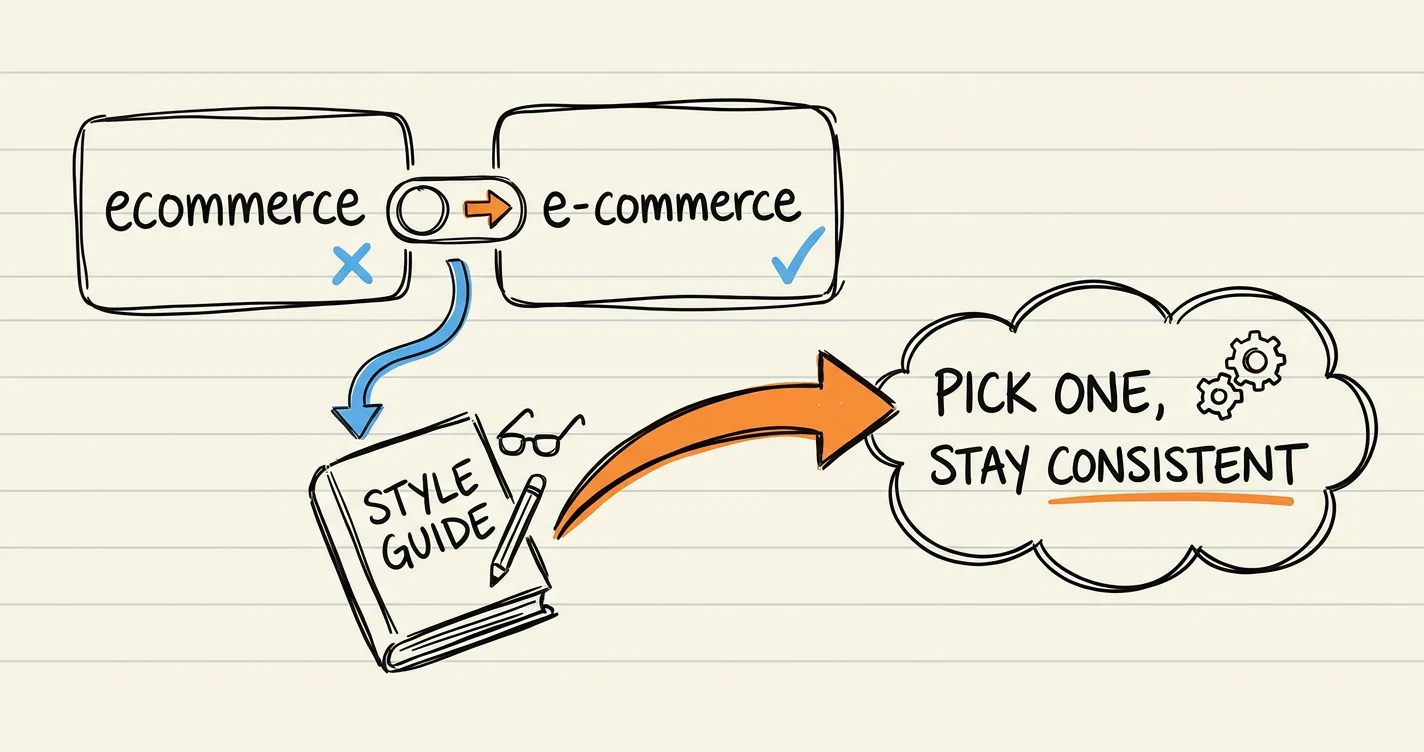
Ecommerce or e-commerce — the short answer is that both are correct. AP Stylebook and Merriam-Webster officially standardize on “e-commerce” with a hyphen, while the industry and most sellers write “ecommerce” without one. Google treats them as the same search query, so the real rule is simpler than the debate: pick one spelling and use it everywhere.
The Short Answer for Writers
- Authority styling (AP, Merriam-Webster, Wikipedia): e-commerce (hyphenated).
- Industry & marketplace use (Shopify, Amazon sellers, brands): ecommerce (unhyphenated) or eCommerce (camel case).
- Google: treats both identically via synonym matching.
So if you are writing for a publisher, follow the style guide. If you are building a store or brand, use whatever your team already uses — consistency beats “correctness”.
What the Style Guides Say
| Authority | Preferred Form | Notes |
|---|---|---|
| AP Stylebook | e-commerce | Keeps the hyphen for most “e-” words |
| Merriam-Webster | e-commerce | Dictionary entry is hyphenated |
| Wikipedia | E-commerce | Primary encyclopedic heading |
| Google dev/editorial | e-commerce | Follows standard American English |
The exception everyone points to is email, which dropped its hyphen decades ago — which is why so many people assume ecommerce should too.
What the Industry Actually Uses
In practice, the unhyphenated form dominates:
- SaaS and marketplaces (Shopify, BigCommerce, Amazon) use “ecommerce” across their own docs and blogs.
- SEO and ad content overwhelmingly uses “ecommerce”.
- “Ecom” (with no “merce” at all) is the standard US industry shorthand — “ecom brand”, “ecom agency”, “ecom tech stack”.
For your store, follow your marketplace: if you sell on a platform that writes “ecommerce”, mirror it so customers see you as native.
Does Spelling Matter for SEO?
No ranking difference exists — Google’s synonym engine matches both forms. What matters is:
- Consistency — mixing “ecommerce” and “e-commerce” across a site looks sloppy and splits your mental brand.
- Natural phrasing — use the full word in titles and headings, and reserve “ecom” for casual contexts.
- International readers — hyphens are slightly more common in older/editorial writing, unhyphenated in tech; neither is wrong.
How to Choose for Your Project
- Publishing/blogging for established audiences → follow AP and use e-commerce.
- Online store or startup → use ecommerce (lowercase or camel case).
- App or SaaS product → use eCommerce or your domain name’s spelling.
- Internal consistency is king → set it in your style doc and enforce it.
Bottom Line
Ecommerce or e-commerce is a spelling preference, not a correctness test: e-commerce for editorial authority, ecommerce for industry and stores, and no SEO penalty either way for choosing one with Google’s synonym handling. Whichever you pick, apply it consistently — and note that “ecom” is perfectly acceptable shorthand when you are talking with people in the industry. For the bigger picture, see our guide to ecom websites and how b2c ecommerce and b2b ecommerce solution compare.
Frequently Asked Questions
Is it ecommerce or e-commerce?
Both are correct. AP Stylebook, Merriam-Webster, and Wikipedia standardize on 'e-commerce' with a hyphen. In everyday industry use, most sellers and tech companies write 'ecommerce' without a hyphen. Pick one and be consistent.
Does Google rank ecommerce and e-commerce differently?
No. Google treats both spellings as the same query via synonym matching, so your site will rank for either form regardless of which one you use.
Chat with Agent PYRA
Tell Agent PYRA your niche and it finds winning products with real-time data: saturation scores, Google Trends, competitor ad performance, and AliExpress sourcing links. Stop scrolling spreadsheets and let AI do the research.
- Real-time saturation & trend analysis
- Cross-referenced Shopify, Amazon & Facebook Ads
- AliExpress & supplier source links
- Competitor ad creative & performance data
Start Finding Winning Products Today
Join thousands of dropshippers who use Pyratrend to spot trending products before they saturate the US market. Get 30 free credits when you sign up — no credit card required.
- Daily updated US-market product data
- Facebook Ad Library integration
- Shopify competitor store tracking
- Custom watchlists & alerts
Explore more ecommerce guides in the Pyratrend Insights hub, or check out today's trending products on our dashboard.